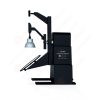
LM-79 Гониофотометр с детектором движения (зеркало типа C)
LSG-6000
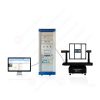
Высокоточный вращающийся светильник Гониофотометр
LSG-1890B
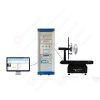
Высокоточный вращающийся светильник Гониоспектрорадиометр
LSG-1890BCCD

Гониофотометр для автомобильных и сигнальных ламп
LSG-1950
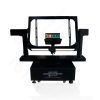
Гониофотометр для светофоров
LSG-1950S
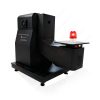
Устройство визуального оповещения пожарной сигнализации VAD, гониофотометр
LSG-1930
Компактный гониофотометр
LSG-1200A
Светодиодный гониофотометр
LSG-1100
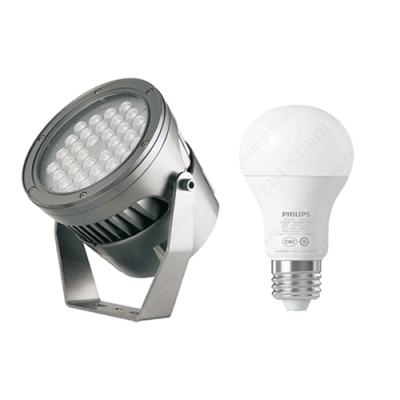 Решения для тестирования светодиодов и светильников
 LM-79 и LM-80 Тестовые решения
 Решения для тестирования светодиодных драйверов
 Решения для проверки бытовой техники
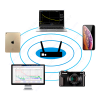 Мобильные и сетевые тестовые решения
 Решения для испытаний автомобильной электроники
 Решения для аудио-, видео- и ИТ-тестирования
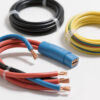 Решения для тестирования кабелей и проводов
 Решения для тестирования вилок и розеток
 Решения для тестирования выключателей питания
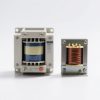 Решения для испытаний трансформаторов
 Решения для тестирования электрических игрушек
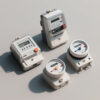 Решения для тестирования счетчиков электроэнергии
 Решения для испытаний моторизованных инструментов
Выберите организацию
для просмотра стандартов
Резюме
In the export trade of electrical and electronic products, RoHS hazardous substance control has become a basic compliance threshold for products. Traditional wet‑chemical testing methods feature complicated workflows and long testing cycles, which can hardly satisfy practical demands for high‑volume rapid material inspection in factories. EDXRF RoHS Testing Equipment is built upon energy‑dispersive X‑ray fluorescence spectroscopic analysis principles. It performs detection by analyzing the wavelength and intensity of characteristic X‑rays emitted from test samples. Elements contained in samples are identified according to differences in characteristic X‑ray wavelengths of various elements, and elemental contents in samples are determined by comparing spectral‑line intensities of different elements. It enables non‑destructive rapid screening for RoHS‑restricted inorganic elements including lead, cadmium, mercury, hexavalent chromium and brominated substances. Taking LISUN EDX‑2A Energy‑Dispersive X‑ray Fluorescence Spectrometer as the research object, this paper elaborates the working principle and key technical parameters of EDXRF RoHS Testing Equipment, compares its advantages against conventional testing approaches, analyzes its practical applications in incoming‑supply‑chain inspection and finished‑product control, and illustrates its applicable boundaries, so as to provide references for electronics manufacturers to establish in‑house RoHS screening systems.
The EU RoHS directive sets clear concentration limits for six categories of hazardous substances in electrical and electronic products: lead, cadmium, mercury, hexavalent chromium, polybrominated biphenyls and polybrominated diphenyl ethers. Export‑oriented enterprises shall conduct hazardous‑substance testing on raw materials, components and finished products to prevent trade risks such as product notifications and recalls. Conventional laboratory wet‑chemical testing includes multiple procedures such as sample digestion, reagent extraction and instrumental analysis. It involves time‑consuming sample pre‑treatment and generates chemical waste liquid, imposing high requirements for operator expertise and laboratory supporting facilities, and is not suitable for primary screening of mass materials on production‑site.
EDXRF RoHS Testing Equipment, namely energy‑dispersive X‑ray fluorescence spectrometer, fills the gap of on‑site rapid‑testing demands in factories. This testing technique is specified as a rapid screening method for RoHS hazardous substances under standard SJ/T 11365‑2006. An X‑ray tube in the instrument emits primary X‑rays to irradiate test samples. Inner‑shell electrons of atoms inside samples are excited and undergo transitions, releasing element‑specific characteristic X‑rays. Each element possesses unique characteristic X‑ray wavelength; element species within samples can be qualitatively identified via wavelength recognition. Signal intensity of characteristic spectral lines is positively correlated with actual elemental content, and content values can be acquired through intensity comparison and calculation. The whole detection process will not damage sample bodies. Solids, powders and liquid materials can be directly loaded for testing, which greatly reduces sample‑processing workload. Therefore, EDXRF RoHS Testing Equipment has been incorporated into quality‑control systems by numerous electronics manufacturers.
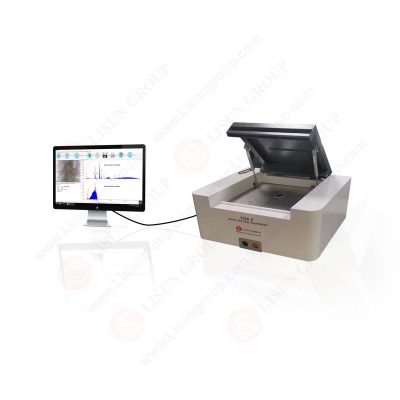
Испытательное оборудование RoHS EDX-2A
LISUN EDX‑2A Energy‑Dispersive X‑ray Fluorescence Spectrometer is a non‑vacuum benchtop EDXRF RoHS Testing Equipment. The complete instrument mainly consists of an X‑ray tube, Si‑pin detector, sample test chamber, signal‑processing unit and supporting analysis software. The X‑ray tube delivers an excitation source with maximum 50 kV high voltage. The detector collects characteristic X‑ray signals released by samples. The software completes energy‑spectrum deconvolution, elemental qualitative‑quantitative calculation and directly outputs RoHS test reports. Equipped with high‑definition camera and illumination system inside the test chamber, the instrument allows operators to observe sample test positions intuitively. It also features over‑current and short‑circuit safety protection mechanisms to guarantee equipment safety for long‑term continuous testing. Core parameters of multiple models within the EDX‑2A series are summarized in the table below.
| Параметры спецификации | EDX‑2A | EDX‑2AC | EDX‑2T |
|---|---|---|---|
| Тип оборудования | Non‑vacuum benchtop | Non‑vacuum benchtop | Vacuum‑type benchtop |
| Общий вес | 50 Kg | 50 Kg | 55 Kg |
| Single Test Duration | 200 сек. | 200 сек. | 100 сек. |
| Тип детектора | Si-pin | Si-pin | SDD |
| Энергетическое разрешение | 149 эВ | 149 эВ | 129 эВ |
| Tube Voltage & Tube Current Output | 50 kV / 600 μA | 50 kV / 600 μA | 50 kV / 600 μA |
| Диапазон анализа контента | 2 ppm‑99.99% | 2 ppm‑99.99% | 2 ppm‑99.99% |
| Основные функции | RoHS тестирование | RoHS + coating thickness measurement | RoHS + alloy analysis + coating thickness measurement |
As the basic‑model EDXRF RoHS Testing Equipment, EDX‑2A performs testing under atmospheric conditions without vacuum system configuration. Its sample‑chamber dimension reaches 610*320*100 mm, capable of holding relatively large‑size electronic components, plastic housings and other samples. It supports direct sample injection for multiple forms including solid, liquid and powder materials. Its content‑analysis range covers 2 ppm to 99.99 %, fully covering regulatory limits for six RoHS restricted substances. The limit for cadmium is 100 ppm, while limits for lead, mercury, hexavalent chromium, polybrominated biphenyls and polybrominated diphenyl ethers are 1000 ppm. The equipped analysis software embeds standard‑curve database and generates complete test reports with one‑click operation after testing, lowering data‑analysis barriers for operators. Meanwhile, the instrument is delivered with EU‑standard calibration samples for enterprises to conduct periodic equipment verification and ensure reliability of test data.
First of all, it belongs to non‑destructive analysis. Tested samples remain intact after measurement. Electronic components and high‑value spare parts can still be put into production after screening, which is suitable for incoming‑material sampling inspection. Secondly, sample pre‑treatment is quite simple. Most plastics, metals and electronic components only need to be placed flat inside the sample chamber for testing. No strong‑acid digestion or chemical‑reagent extraction operations are required, and no chemical waste liquid is generated. It does not impose strict requirements for laboratory environments, and EDXRF RoHS Testing Equipment can be deployed in ordinary quality‑control rooms of manufacturing enterprises. Thirdly, it delivers high testing efficiency. Single‑batch sample testing only takes hundreds of seconds. Compared with hours‑or‑days‑long testing cycles of wet‑chemical methods, it meets demands for high‑volume rapid material screening. Fourthly, it features low operating cost. No chemical reagents are consumed during regular operation, and later‑stage maintenance workload is low.
Nevertheless, capacity boundaries of EDXRF RoHS Testing Equipment shall be objectively recognized. As a rapid‑screening instrument, it cannot distinguish trivalent chromium from hexavalent chromium among chromium elements, nor can it detect four organic phthalates newly added under RoHS 2.0. When screening results approach regulatory limit values, further confirmation shall be performed at third‑party laboratories adopting standard chemical methods. Screening results shall not be directly treated as legally‑valid official reports.

EDXRF RoHS Testing Equipment is widely applied in full‑process quality control for electrical‑electronic manufacturing. Firstly, for supply‑chain incoming‑material screening: preliminary warehouse‑entry screening is carried out for purchased spare parts such as plastic pellets, metal fittings, connectors and wires, to identify hazardous‑substance‑exceeding materials at source and block unqualified raw materials from entering production lines, thus avoiding economic losses caused by subsequent finished‑product scrapping. Secondly, it is adopted for material‑selection evaluation in R&D phase. When developing new products, enterprises conduct RoHS elemental screening for alternative raw materials and prioritize materials complying with limit requirements, so as to satisfy compliance requirements from the design stage. Thirdly, it supports finished‑product ex‑factory sampling inspection. Sampling screening is implemented for assembled complete machines and accessories to discover risks brought by material mixing in advance. Fourthly, it serves for supplier management. Screening data from EDXRF RoHS Testing Equipment acts as auxiliary reference for supplier assessment and urges upstream supply chains to implement hazardous‑substance control. Apart from electrical‑electronic industry, industries requiring heavy‑metal control including toy, hardware accessory and packaging‑material industries can also adopt such equipment for inorganic hazardous‑substance screening.
According to practical application experience, enterprises shall implement proper daily equipment management to guarantee data stability of EDXRF RoHS Testing Equipment. Test surfaces of samples shall be kept flat during placement to reduce test deviations induced by uneven sample surfaces. Periodic intermediate verification shall be performed using supporting standard reference samples. For plated and multi‑layer composite samples, data interference caused by matrix effect shall be noticed and result evaluation shall be handled prudently. For complete detection of all ten RoHS 2.0 substances, enterprises may deploy phthalate‑testing equipment as supplement. EDXRF RoHS Testing Equipment undertakes screening for six inorganic elements, while pyrolysis‑gas‑chromatography equipment completes screening for four phthalates. The two sets of instruments cooperate to realize in‑house rapid detection for all RoHS 2.0 regulated substances.
Faced with increasingly stringent global green‑environmental‑protection regulations, electrical‑electronic manufacturers must establish effective hazardous‑substance control systems. Based on X‑ray fluorescence spectroscopic technology, EDXRF RoHS Testing Equipment identifies element species qualitatively via characteristic X‑ray wavelengths of elements and determines elemental contents via spectral‑line intensity. With prominent advantages including non‑destructiveness, high speed, simple sample‑processing and low operating cost, it has become an essential tool for factory‑side rapid screening of RoHS inorganic hazardous substances. As a mature EDXRF RoHS Testing Equipment, LISUN EDX‑2A Energy‑Dispersive X‑ray Fluorescence Spectrometer meets primary‑screening demands of domestic electronics manufacturers covering incoming‑material inspection, R&D and finished‑product links. During practical usage, enterprises shall clearly understand application scopes and limitations of instruments, combine equipment screening with confirmatory testing from third‑party laboratories, improve full‑supply‑chain hazardous‑substance control workflows and mitigate compliance risks for product exports.
Метки:EDX-2AВаш электронный адрес не будет опубликован. Обязательные поля помечены *

 Английский
 中文简体
中文简体 Русский
 Español
 Português
 Türkçe
 العربية
 Deutsch
 Polski
 Italiano
 Français
 한국어
한국어 ไทย
ไทย Tiếng Việt
 日本語
日本語